Robotánica · Robotics for living systems

Starting in greenhouses. Building for a living planet.

We build robots for repeatable visual inspection in greenhouses. Every inspection builds capabilities for a larger mission: ecosystem restoration at planetary scale.

First product: greenhouse inspection. Long-term ambition: one trillion trees reaching maturity.
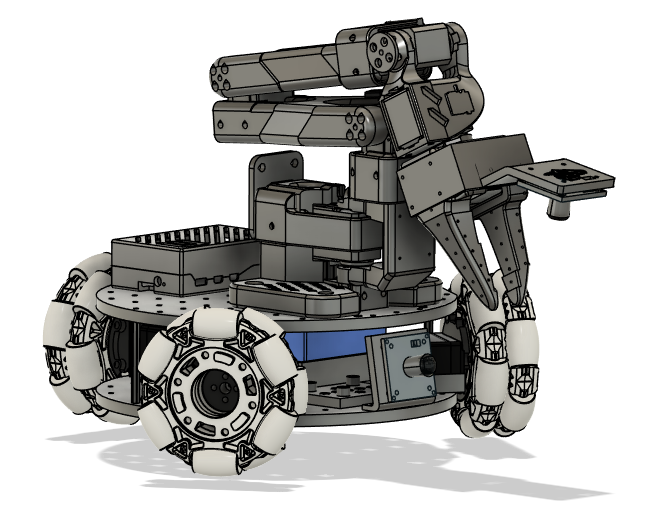
Product in developmentLeKiwi + SO-101
LeKiwi reference CAD: a mobile base with three omni wheels and a robotic arm
Development platform · LeKiwi + SO-101 The open-source hardware platform informing development. This is a reference design; greenhouse applications are in development. LeKiwi · SIGRobotics-UIUC · Apache 2.0

The first product

A clearer record of what changes in your greenhouse.

Each pilot starts in one defined growing area. A camera robot follows a planned route under your team's supervision, records what it sees and hands over a traceable inspection record.

  1. Repeatable observations

    Revisit selected areas and compare views over time.

  2. Visible coverage

    See what was inspected and where a closer look is needed.

  3. Useful records

    Connect observations with their location and time for human review.

Meet the first robot

Why this starting point

Build useful tools. Carry the learning further.

Greenhouses offer a concrete first workflow. Nurseries connect cultivated plants to restoration sites. Across these environments, consistent observations and a history of each intervention can make care easier to organise.

A record from seed to survival Plant records connect the nursery, planting site and later observations of survival. Seed 1 Nursery 2 Field planting 3 Survival 4
Concept illustration
  1. 01

    Seed

    Record species and origin for locally suitable plants.

  2. 02

    Nursery

    Follow growth and prepare plants for the next setting.

  3. 03

    Field

    Connect each planting area with its nursery history.

  4. 04

    Survival

    Return to measure establishment and continuing care.

Software and operating experience can connect these stages. Each new environment needs tools suited to its terrain and tasks.

The wider direction

Small beginnings for living landscapes.

We’re exploring a restoration approach that combines native vegetation, the movement of rainwater and useful robotic work. The goal is to help ecosystems establish and recover with less ongoing intervention.

Four horizons

Useful today. Viable over time.

Product development and ecological research can advance together. Each horizon has its own useful work, economics and evidence.

  1. Near term

    A useful greenhouse robot

    The work
    Develop and evaluate a supervised inspection workflow.
    The value
    A clearer visual record for growers, with operating effort measured.
    How it could be funded
    A scoped commercial pilot agreed with the grower, accounting for the full cost of delivery, operation and support.
    Next evidence
    A pilot that demonstrates usefulness against an agreed baseline.
  2. Next applications

    Nurseries and repeatable care

    The work
    Adapt observations and records to plants moving from nursery to field.
    The value
    Potential products and services for people growing and establishing plants.
    How it could be funded
    Product, service and software revenue, with growth capital considered as costs, margins and customer retention support expansion.
    Next evidence
    Repeat demand, practical operation and sustainable service economics.
  3. Field research

    Restoration methods that travel

    The work
    Compare planting, water capture and selected robotic tasks in local trials.
    The value
    Evidence of survival, recovery and the total work required.
    How it could be funded
    Potential co-funding from researchers, landholders or competitive grants could support small trials alongside product development.
    Next evidence
    Results that hold across seasons and justify trials in further settings.
  4. Planetary horizon

    Care across places and generations

    The work
    Support locally adapted restoration through a wider network.
    The value
    Shared methods, lasting stewardship and cumulative ecological recovery.
    How it could be funded
    Restoration projects need sustained local funding and stewardship. Sales of the first robot do not automatically finance the planetary mission.
    Next evidence
    Many independent places sustaining results over decades.

The Long Care

onetrillion

Trees reaching maturity · long-term ambition

A mission measured in generations.

Our long-term ambition is to help one trillion trees reach maturity through planting and natural regeneration, in places where forests belong. Survival, wider recovery and enduring care give that ambition meaning.

Robotánica

Robotánica builds the tools

We are a for-profit company developing robotics products and services. The first greenhouse product is a concrete route towards customers, operating experience and a lasting business.

The Long Care

The Long Care holds the wider mission

Founded from Robotánica, The Long Care sets out a framework for a future federation of people and organisations working across ecosystems, technologies and generations.

Read The Long Care charter

Useful products support the company. Research develops methods. Long-term collaboration gives restoration a horizon beyond any one product.

Build with us

Let’s discuss a greenhouse pilot, field research or investment.

The work starts with a specific growing space, field question or investment thesis.

Growers and nurseries

Tell us about your inspection routine and the observations you want to make more consistent.

Discuss a pilot

Restoration practitioners and researchers

Bring a site, a question or expertise in native plants, soil, water or field measurement.

Explore a research collaboration

Investors and long-term partners

Explore the first product, its path to commercial validation and the larger mission it can serve.

Talk about the company
